The eye area can have a significant influence on the overall appearance of the face. As the skin gradually loses elasticity, the upper eyelids may become heavier and the area beneath the eyes can appear puffier. Blepharoplasty is a surgical procedure that can address some of these changes by modifying excess skin and tissue around the eyelids. People exploring aesthetic treatments can also learn about available options through Coolaser Clinic, where cosmetic care is approached with attention to individual needs and treatment goals.
Why the Eyelids Change Over Time
Aging affects every part of the face, but changes around the eyes can become particularly noticeable. The skin in this area is delicate, and gradual changes in elasticity can lead to folds, loose skin, and a heavier appearance.
Genetic factors also play an important role. Some people naturally have more prominent eyelid tissue or under-eye bags even when they are relatively young.
Sun exposure and everyday environmental factors can contribute to visible skin aging as well. For this reason, caring for the eye area should be part of a broader approach to facial skin care.
What Does Blepharoplasty Address?
Blepharoplasty focuses on structural changes around the eyelids rather than simply treating the surface of the skin.
Depending on the individual situation, surgery may address:
- Excess skin on the upper eyelids
- Loose tissue around the lower eyelids
- Certain types of under-eye bags
- Changes in eyelid contours
- Age-related heaviness around the eyes
The procedure can be performed on the upper eyelids, lower eyelids, or both. The appropriate approach depends on the patient’s anatomy and the concerns identified during consultation.
Upper Eyelid Surgery
Changes in the upper eyelids can make the eyes appear smaller or create a heavier appearance around the brow and eye area.
During upper eyelid surgery, an incision is commonly placed within the natural eyelid crease. This allows the surgeon to address excess tissue while taking the natural anatomy of the eyelid into consideration.
For some people, upper eyelid changes are primarily cosmetic. In other situations, excess skin can contribute to problems with peripheral vision. When visual function may be affected, a proper medical evaluation is particularly important.
Lower Eyelid Surgery
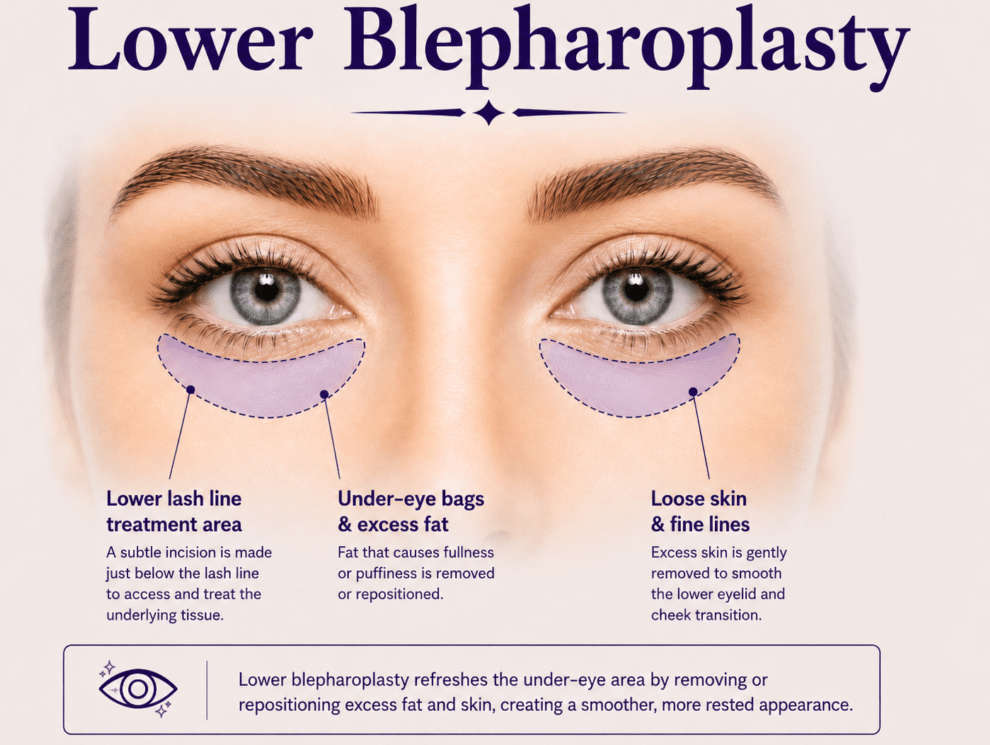
The lower eyelids can develop puffiness or prominent under-eye bags as facial tissues change over time.
Lower blepharoplasty may involve different surgical techniques depending on the patient’s anatomy. The procedure can address excess skin or modify the position of fatty tissue when appropriate.
Because the lower eyelid is a delicate structure, careful planning is essential. The treatment approach should reflect the patient’s facial proportions rather than follow a one-size-fits-all method.
What Makes a Good Candidate?
There is no universal age at which someone should consider eyelid surgery. The decision usually depends more on individual concerns, anatomy, general health, and expectations than on age alone.
A consultation can help determine whether a person may be suitable for the procedure. The specialist may consider the condition of the eyelid skin, underlying tissues, eye health, previous procedures, and any medications that could affect treatment or recovery.
People should also have realistic expectations about what surgery can achieve.
Preparing for a Consultation
Learning about the procedure before an appointment can make the consultation more productive. Patients may want to make a list of their concerns and questions in advance.
Important topics to discuss can include:
- Which eyelids need treatment
- The recommended surgical technique
- Expected changes in appearance
- Recovery time
- Possible side effects
- Potential complications
- Aftercare requirements
- Alternative cosmetic treatments
A detailed consultation also provides an opportunity to discuss personal goals and determine whether surgery is actually the most suitable option.
What Is the Recovery Process Like?
The recovery period varies between individuals. Swelling and bruising are common after eyelid surgery, particularly during the first several days.
Patients may receive instructions regarding rest, physical activity, eye care, and protecting the treated area. Following these instructions carefully can support the healing process.
The appearance of the eyelids can change throughout recovery. Initial swelling may make the area look different from the eventual result, so patience is important.
Patients should also contact their medical professional if they experience symptoms that concern them during recovery.
Surgery Is Not the Only Approach
Not every visible change around the eyes requires surgery. Modern aesthetic care includes a wide range of non-surgical treatments that can address concerns such as skin texture, pigmentation, fine lines, and overall skin quality.
However, these treatments work differently from blepharoplasty. Non-surgical procedures cannot necessarily correct significant excess eyelid skin or certain structural changes.
An individual assessment can help clarify whether a surgical or non-surgical approach is more appropriate.
Maintaining the Eye Area After Treatment
Good skin care remains important even after cosmetic treatment. The aging process continues, so protecting the skin can help maintain a healthy appearance.
Daily sun protection is particularly important because ultraviolet exposure contributes to premature skin aging. Gentle cleansing, appropriate moisturization, and avoiding unnecessary irritation can also support general skin health.
Patients who have undergone surgery should follow their specialist’s specific recommendations rather than immediately returning to their usual routine.
Making an Informed Decision
Cosmetic procedures should be approached as personal decisions rather than treatments that everyone needs. Understanding the reason for considering surgery is an important part of the process.
Someone may want to address a specific change in the eyelids, while another person may be more interested in overall facial rejuvenation. These different goals can lead to different treatment plans.
Taking time to compare options, understand recovery, and discuss potential risks with a qualified professional can help create realistic expectations.
Final Thoughts
Blepharoplasty can address selected changes in the upper and lower eyelids, including excess skin and certain forms of tissue-related puffiness. Because the eye area has complex and delicate anatomy, treatment should always be planned individually.